What does AI search say about your restaurant?
Google's AI Mode reached France in July 2026. What AI assistants read when a guest asks where to eat, and how to make your menu easy for them to quote.

Amelia Cooper
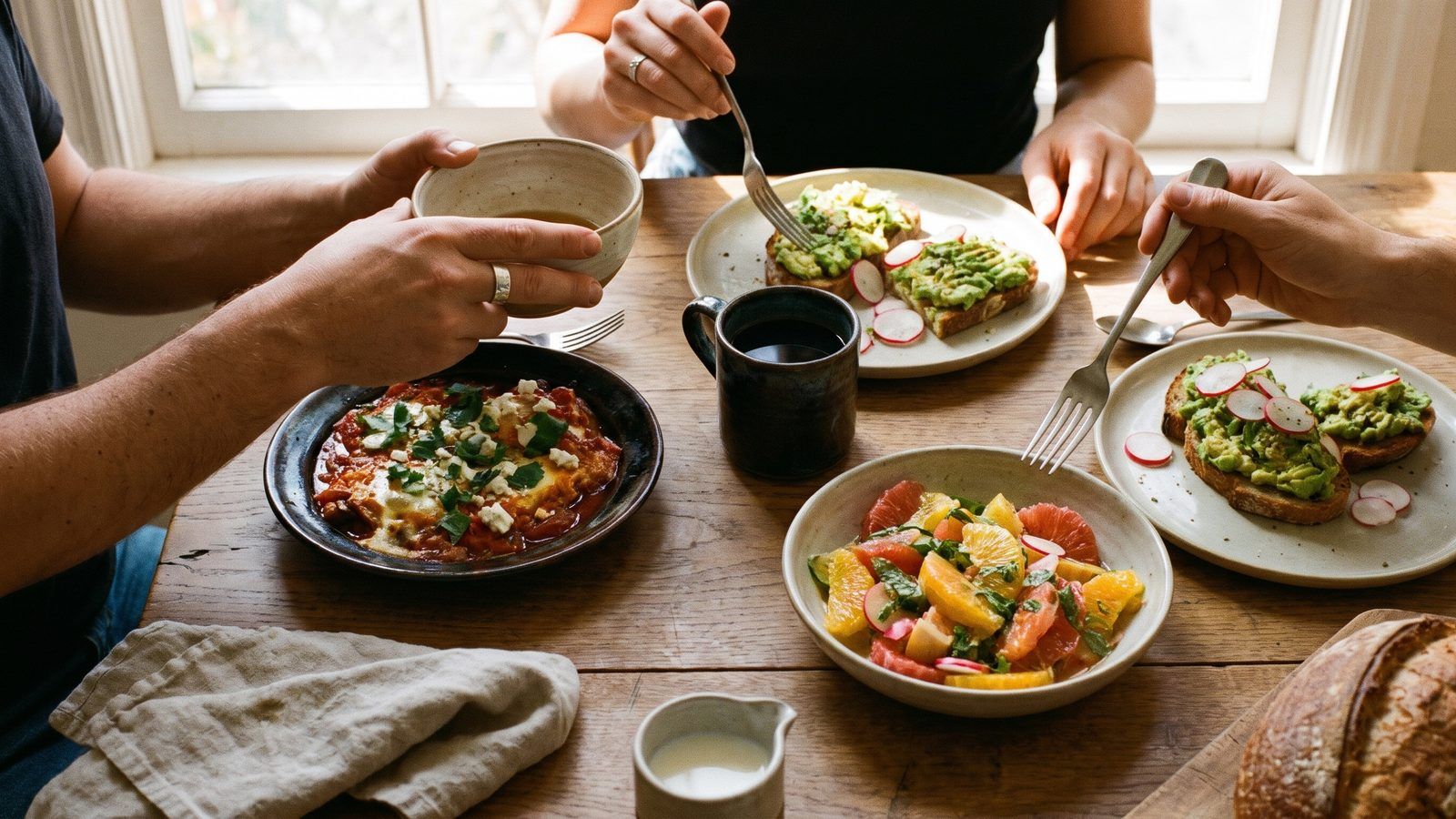
A guest standing on the Promenade des Anglais at seven in the evening no longer types "restaurant near me" and scrolls a map. More and more, they ask a full question: "Where can I get a good vegetarian dinner near the old town tonight, not too expensive, with a terrace?" Since Google switched on AI Mode and AI Overviews in France in July 2026, that question gets a written answer with a handful of names in it, on the same screen where the map used to be.
The answer is only as good as what those systems can read about you. A restaurant with a lovely room and a PDF menu photographed three years ago is, to an AI assistant, close to invisible. Here is what these tools read, and what you can check this week.
Is AI search really how guests choose a restaurant now?
Not yet for everyone, but the shift is real. In BrightLocal's 2026 Local Consumer Review Survey, 45% of consumers said they had used a generative AI tool to get recommendations for a local business in the past year. That survey is mostly American, and French habits tend to follow a little later, but the direction is the same. Visitors planning a weekend in Nice from Munich or Milan are often ahead of locals here.
It is worth being clear about what is not happening here yet. In April 2026 Google extended table booking inside AI Mode to eight more markets, including the UK, with partners such as TheFork and OpenTable. France was not on that list. For a French restaurant today, AI search is mainly about being named in the answer, and then being easy to book once the guest clicks through.
What does an AI assistant actually read about a restaurant?
No company publishes its exact recipe, but there is evidence of where answers come from. A Yext Research study published in October 2025, which looked at 6.8 million citations across ChatGPT, Gemini and Perplexity, found that for food service, 41.6% of cited sources were third-party listings such as Google Business Profile and Yelp, 39.8% were the businesses' own websites and 13.3% were reviews and social media.
So your own pages carry almost as much weight as the listings, and what an assistant can quote is text: a dish, its price, the fact that it is vegan, your Sunday hours. A photo of a chalkboard or a scanned PDF gives it very little.
If the question is about a vegetarian dinner with a terrace for under 30 euros, a restaurant whose pages state its vegetarian dishes, its prices and its terrace has a chance of being named. One that states none of these leaves the assistant guessing.
Which details make the difference in an AI answer?
The details guests ask about are fairly predictable. Google's own trend data on follow-up restaurant searches in the US points to things like family-friendly, a view, a bar, vegetarian or vegan options and an outdoor terrace. Add the basics every guest needs: where you are, when you are open, what it costs and whether you take bookings.
Your menu as text, with prices
A menu that exists as real text, dish by dish with prices, is something an assistant can read and quote. Keep it current, because an assistant repeating last summer's prices does you no favours.
Dietary and allergen information at the dish
"Do they have gluten-free options?" is one of the most common follow-up questions. If your gluten-free and vegan dishes are marked on the menu itself, the answer can work in your favour.
The languages your guests search in
A German visitor asks in German. A menu that also reads properly in German, English and Italian gives the assistant text in the language of the question.
The same hours and details everywhere
If your website says closed on Mondays and your Google profile says open, the assistant has two answers and no reason to trust either. Check that your name, address, phone number and hours match across Google, your website, your booking page and the main listings.
What can you check this week without any new tools?
- Ask the assistants yourself. Open ChatGPT, Gemini or Google's AI Mode and ask three questions a guest would ask: one about your cuisine and neighbourhood, one about a dietary need, and one in a foreign language. Note whether you appear and what is said about you.
- Read your Google Business Profile as a stranger would. Categories, hours, photos, the menu link, attributes such as terrace or step-free access. Fill in whatever is empty.
- Replace the PDF. If your only menu online is a PDF or a photo, publish a text version with prices on a page of its own.
- Answer the questions guests already ask. The questions your team hears on the phone (Is there a children's menu? Can we bring the dog? Where do we park?) belong on your pages, in plain words.
- Reply to recent reviews. Reviews are part of what AI tools cite, and a reply that says "yes, we have two vegan mains" is useful text too.
None of this guarantees a mention, since a busy neighbourhood has more good restaurants than one answer has room for. What you control is whether the assistant finds accurate, quotable facts about you when it does look.
How does Deskadora help?
Deskadora's QR menu is free and unlimited, and every venue gets a public menu page built to be read by search engines and AI assistants, not only by guests holding a phone at the table. The page describes the restaurant, its menu sections, dishes and prices as schema.org structured data, together with opening hours, cuisine, price range and dietary options, so the facts are machine-readable rather than buried in an image.
If you are starting from a paper or PDF menu, you can photograph it and Deskadora turns it into structured dishes that you check and correct. Menus are translated into twelve languages, and your manual corrections are kept. Allergens sit at dish level, with a clear difference between "contains" and "may contain". The public pages are also open to the main AI crawlers, so assistants that respect a site's rules are allowed to read them.
On paid plans, the same page carries the booking widget, so a guest who arrives from an AI answer can book a table directly with you rather than through a marketplace.
Deskadora does not manage your Google Business Profile, and no tool can promise a place in an AI answer. What it does is keep your menu, prices and hours as current text in your guests' languages.
What is a sensible next step?
This week, run the three-question test in two AI assistants and write down what they say about you. If the answers are thin or wrong, start with the menu: current, as text, with prices and dietary marks, in the languages your guests read. You can create a free Deskadora QR menu and its public menu page in an afternoon, then add reservations when you are ready.
FAQ
Do I need a website for AI search to find my restaurant?
It helps, but it is not the only route. Listings such as Google Business Profile are among the most cited sources. Still, a simple, current page with your menu, hours and contact details is where you control the detail, whether that is your own website or a menu page.
Does structured data guarantee that my restaurant appears in AI answers?
No. Structured data makes your facts easier to read and harder to misread, but no search engine or assistant promises to use it in a particular way. Treat it as making yourself legible, not as a ranking trick.
How often should I update my online menu?
Whenever prices or dishes change, and at least at each change of season. Assistants repeat whatever they last read.
Related articles
Who fills the table when a guest cancels at six o'clock?
Late cancellations outnumber no-shows more than three to one in a large 2026 dataset. Here is how to get a released table back into use before service.
Are your festive opening hours right everywhere guests look?
Between Christmas and 2 January, guests check hours before they book. Here is how to keep Google, your website and your phone saying the same thing.
Should you ask for a deposit on New Year's Eve?
New Year's Eve is the night an empty chair costs most. Here is when a deposit makes sense, how to set it fairly and how to resell tables that fall through.
How do you plan staff and stock when guests book later?
Guests book later and turn up less predictably. A simple pickup log, one flexible shift and firmer bookings let you set the rota and the prep with less guesswork.
Is your lunch service ready for the meal-voucher vote?
France is voting on supermarket use of meal vouchers. Whatever the result, weekday lunch is won on certainty. Four fixes to make before the winter.