Should you ask for a deposit on New Year's Eve?
New Year's Eve is the night an empty chair costs most. Here is when a deposit makes sense, how to set it fairly and how to resell tables that fall through.

Amelia Cooper
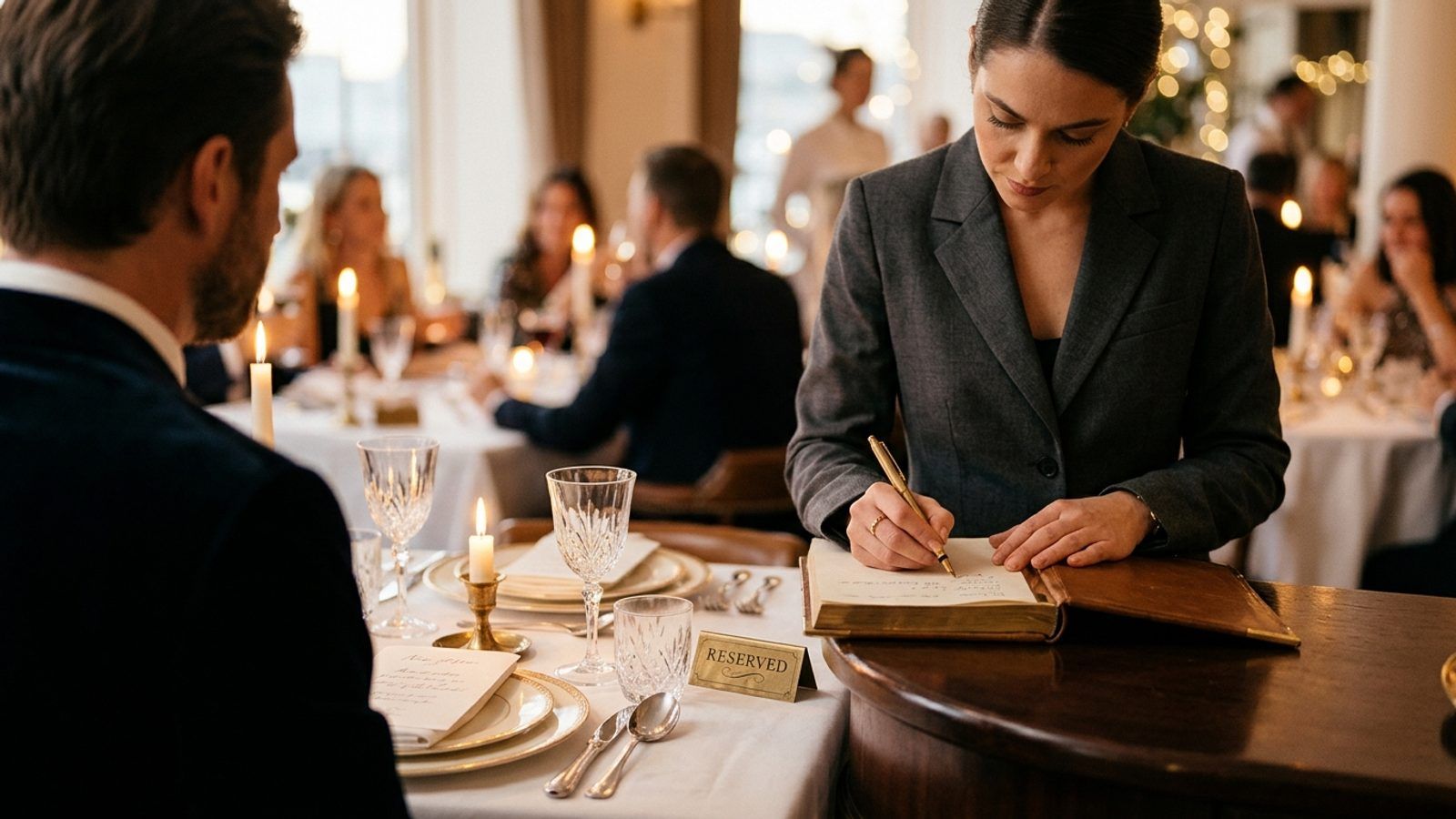
On 31 December a table is worth more than on any other night of the year. It is also the night an empty chair hurts most. The set menu has been bought in for a head count, the extra staff are on the rota, and a table that falls through at eight o'clock cannot be resold at ten.
Why is New Year's Eve the riskiest night to leave unprotected?
On an ordinary Tuesday a no-show costs you one cover. On 31 December it costs a full-price set menu, the stock bought for it and the seat you could have given to someone on the waiting list. The money is concentrated in one sitting, so one gap shows.
Some figures help to frame the booking pattern, with a caveat. They are British, from DesignMyNight data quoted in an Access Group article of 2 September 2026. Christmas Day bookings are made 50 days ahead on average, the average Christmas booking is 15.5 guests, and the average New Year's Eve booking is 3.9 guests. Festive demand arrives early, and some of it arrives in big parties. We have found no equivalent published figures for France, so treat them as a direction and check your own booking book from last year.
What does the 2026 mood mean for festive bookings?
A VoucherCodes forecast reported by The Morning Advertiser on 22 October 2026 expects UK December hospitality spend of 13.3 billion pounds, up 3%. The same report finds 44% of consumers planning to visit fewer venues, and restaurant visitor numbers slightly down at 0.9%. Its commercial chief says people are investing in memorable experiences.
Read together, that points to fewer visits with more weight on each one. Guests who go out on 31 December have chosen the occasion carefully, and a limited number of seats on that night is what you most want to fill and protect. Again, this is a UK forecast, not a French one.
Should you ask for a deposit, and for which nights?
For the nights when each table is sold once, at a fixed menu and a fixed time, yes. That usually means 24 and 31 December, and any large party at other times. For ordinary December evenings a deposit adds friction without much protection, so keep it for the nights that earn it.
Three decisions make a deposit work. First, the dates it applies to. Second, the amount. A token sum does little. A share of the set menu per guest, enough to cover what you bought for that seat, is easier to defend. Third, the refund rule, and it should be written down before the guest pays.
In France the wording matters. The law treats different kinds of advance payment differently, and the label you use changes what each side can do if the booking is cancelled. Confirm your wording with your accountant or your trade body before you publish it.
How do you make a deposit feel fair to guests?
Give the reason in one sentence: you buy and staff for the number of guests booked. People accept a rule they can understand.
Then keep the terms simple. Free cancellation with a full refund up to a clear date, for example one week before, is easy to explain and keeps goodwill. State the rule on the booking page, in the confirmation message and in the guest's own language, which on the Côte d'Azur is often not French. Make changes easy, so a table for six that becomes five does not turn into an argument.
What happens to tables when a deposit is not paid or a booking is cancelled?
A held table that never gets paid is the same as a no-show, only earlier. Give the guest a short payment window, then release the table. A seat freed on 27 December is easy to resell. One freed at six in the evening on 31 December is not.
Keep a waiting list for the night, and offer released tables to it in order. Reminders a day before and a few hours before also help, since they give a guest who has forgotten, or changed plans, the chance to tell you while the table can still be resold.
How Deskadora helps
Deskadora's booking widget takes reservations on your own website with party size and time. Deposits are configurable, so you choose when they apply, for instance only on 31 December or only for larger parties, and the request is made at the moment of booking. If a required deposit is not paid within the window, the reservation is cancelled and the table goes back on sale.
Guests receive a reminder by email and SMS 24 hours before, and an SMS about two hours before. On the plans that include it, the AI voice agent answers the phone during service and can take or change a booking, which matters when the phone rings hardest on the busiest evenings. Reservations and deposits are part of the paid plans. The QR menu is free and unlimited, so you can publish your festive menu in several languages today.
If you are planning 31 December, start with the menu and the dates. A free account at deskadora.com is enough to put the festive menu online, and you can look at deposits and the booking widget when the numbers are ready.
FAQ
How much deposit should a restaurant ask for on New Year's Eve?
There is no standard figure. Many venues ask for a share of the set menu price per guest, enough to cover what was bought for that seat and easy to explain. Check the wording of the terms with your adviser.
When should a restaurant open New Year's Eve bookings?
If French guests behave like the British ones in the data above, with Christmas Day booked about 50 days ahead, early November is a sensible opening. Your own booking history from last year is a better guide than any national figure.
Can I take deposits on a free account?
No. Deposits and reservations are part of the paid plans. The free plan covers the unlimited QR menu, which you can use to publish your festive menu in several languages.
Related articles
Which dishes on your menu are actually making you money?
Ingredient costs are squeezing restaurant margins. How menu engineering shows which dishes earn their place, and how to act on it without reprint costs.
How do you plan staff and stock when guests book later?
Guests book later and turn up less predictably. A simple pickup log, one flexible shift and firmer bookings let you set the rota and the prep with less guesswork.
Is your lunch service ready for the meal-voucher vote?
France is voting on supermarket use of meal vouchers. Whatever the result, weekday lunch is won on certainty. Four fixes to make before the winter.
Should your restaurant take reservations over WhatsApp?
WhatsApp adoption varies sharply across Europe, but for many guests it is the only app they already have open. What to check before switching bookings on there.
How many systems does it take to seat one table?
Most restaurants run more software than they realise, and the cost lands on staff attention. How to audit your stack before the autumn season.