Should your restaurant take reservations over WhatsApp?
WhatsApp adoption varies sharply across Europe, but for many guests it is the only app they already have open. What to check before switching bookings on there.

Amelia Cooper
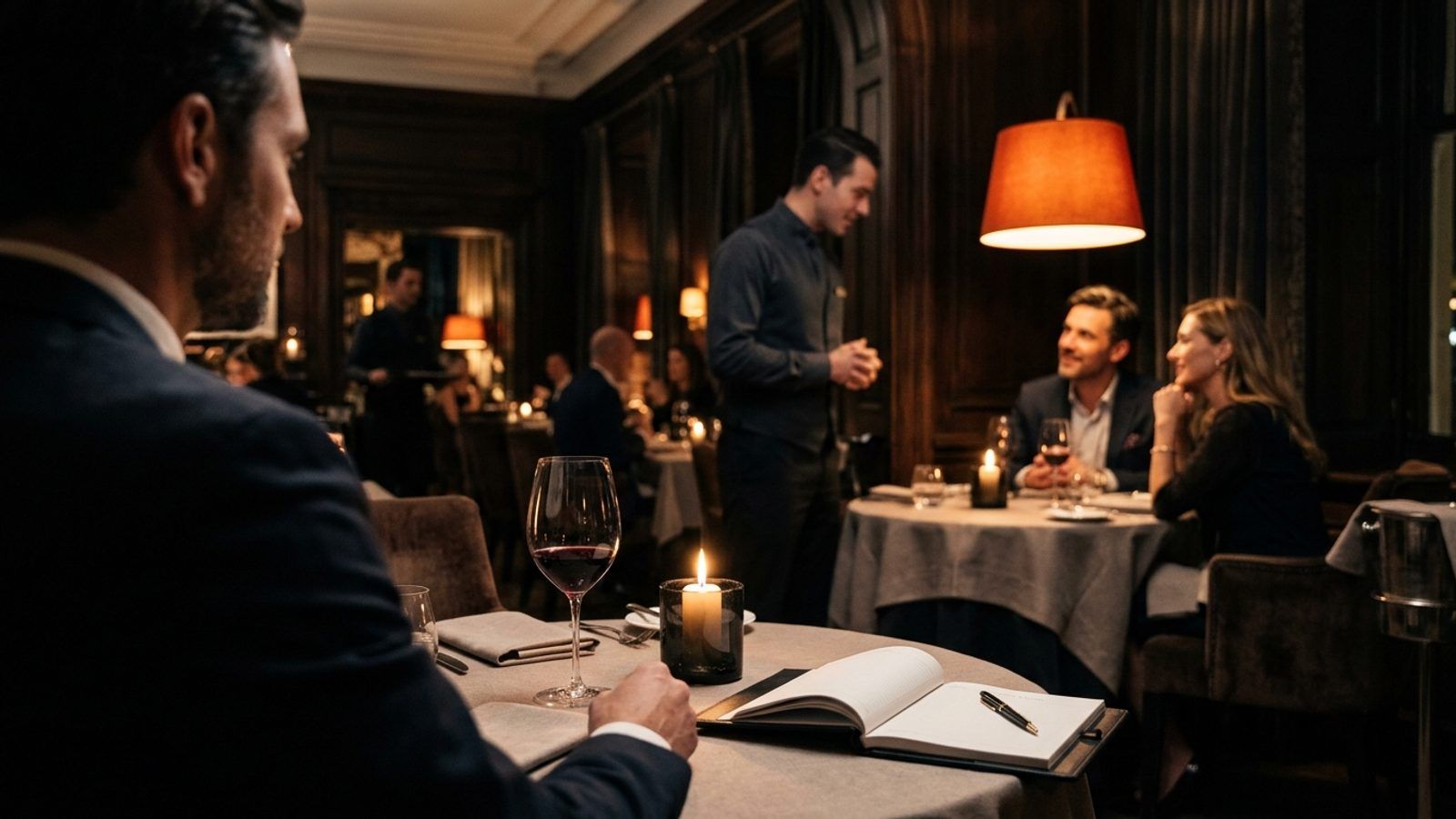
A guest scrolls past your restaurant's Google listing on a Tuesday evening and taps the WhatsApp icon instead of the phone number, asking whether there is a table for four at nine. Nobody replies. Not because your team is careless, but because nobody owns that inbox. The number is a manager's own phone, checked between courses if at all, or a WhatsApp Business account nobody opens the way they open their email. By the time somebody sees the message, the guest has already booked somewhere else.
This is worth a closer look this autumn, because 2026 is the year messaging stopped being a side channel for hospitality and became where a growing share of the conversation with guests actually happens, particularly with visitors from outside France.
How much of Europe is actually on WhatsApp?
The honest answer depends heavily on where your guest is from, and France is the outlier. Recent adoption figures put WhatsApp penetration at 92.8% in Spain, 90.9% in Germany, 90.3% in Italy and 90% in the United Kingdom, close to the default messaging app in each of those markets. France sits well behind its neighbours, at 66.6%.
For a restaurant on the Côte d'Azur, that gap matters less than it looks. Two French guests in three are on WhatsApp regardless, and almost all of your Spanish, Italian, German and British visitors are. A summer terrace seating tables of mixed nationalities is, in practice, a room where WhatsApp is the one messaging app nearly everybody already has open, whatever their own country's national average happens to be.
Businesses have noticed the shift. WhatsApp Business now counts more than 200 million active business accounts worldwide, and Meta's own figures put daily business-to-consumer messages above two billion. Within Europe specifically, WhatsApp traffic carried on business messaging platforms grew 35% in 2025. Travel and hospitality is named as one of the categories driving that growth, used for booking questions, last-minute changes and the real-time back-and-forth a guest wants at the exact moment they are deciding where to go.
What happens to a message with no system behind it?
Nothing dramatic, which is exactly the problem. The message does not bounce or produce an error. It sits, read or unread, in a chat thread nobody has made part of the booking process.
Compare that with a phone call. A missed call is obvious the moment somebody looks at the handset, and most restaurants have already worked out how to cover the phone during service. A WhatsApp message hides in plain sight. It can sit unanswered for an hour and look, to anyone glancing at the screen, exactly like every other message that does not need an answer.
The guest, meanwhile, is not waiting patiently. WhatsApp has trained people to expect a fast reply, not a fax-machine one. A message answered forty minutes later, after the guest has already messaged two other restaurants, has cost a booking you never knew you were competing for.
Is a WhatsApp booking actually safe to rely on?
A free-text message is not, and this is where a lot of restaurants stop, reasonably enough. "Table for four tonight" tells you nothing about whether a table for four is actually free tonight. Somebody still has to check the book, reply, and hope the guest confirms before somebody else takes the slot, all inside a chat window that was never built to hold a reservation.
A structured booking flow inside WhatsApp is a different matter. Instead of free text, the guest answers set questions, the same date, time and party size a booking widget on your own website would collect, and the reply comes back checked against your actual availability rather than a staff member's memory of the book. Nothing depends on somebody reading a message correctly at ten o'clock, mid-service.
What should you check before switching it on?
A few things, before a WhatsApp link goes on your Google Business Profile or your Instagram bio.
Confirm the number guests will message is one your booking system actually reads, rather than a personal phone checked between covers. Confirm a booking taken there lands in the same guest record as every other channel, so a WhatsApp regular is recognised at the door the same way a phone or website regular already is. And confirm your plan actually includes it. This sits with the rest of the reservation and messaging tools rather than the free digital menu, alongside the booking widget and the AI voice agent.
How Deskadora helps
Deskadora's WhatsApp booking sits inside the same reservation system as the booking widget and the voice agent, not beside it as a separate tool. A guest who messages your number is guided through a short structured form (party size, date, time, contact details) rather than left to type a free-text request, and the reply they receive is checked against your live book rather than guessed at.
Whichever channel a booking arrives through, it lands in the same guest profile. A regular who books by phone in June and messages on WhatsApp in August is still one guest with one history, not two. Where a venue uses deposits for no-show protection, the same rules follow the booking regardless of which channel it arrived through. The venue's own number carries a wa.me link and a QR code a team can add to a table tent, a Google Business Profile or an Instagram bio, so guests who would rather message than call have somewhere to do it that actually reaches the book.
None of this replaces the phone or the website widget. It sits next to them, so the guest who has already opened their preferred app gets an answer instead of silence.
FAQ
Do I need a separate WhatsApp number for my restaurant?
No. Bookings can be taken over a shared number keyed to your venue, so there is nothing to register with Meta before you start. A dedicated number carrying your own venue's identity is available separately for restaurants that want their own branded WhatsApp presence.
Will a WhatsApp booking show up in my existing reservation system?
Yes. It is the same booking record as one taken by phone or through the website widget, checked against the same availability and attached to the same guest profile, so nothing needs re-entering by hand afterwards.
Is WhatsApp only useful for tourist guests?
Mostly not, even in France. Two in three French guests already use WhatsApp, and for the ones who do not, the phone and the website booking widget are still there. The point of adding it is to answer guests where they already are, not to replace the channels that already work.
Related articles
How many systems does it take to seat one table?
Most restaurants run more software than they realise, and the cost lands on staff attention. How to audit your stack before the autumn season.
How do you take group bookings without losing the evening?
Group bookings are the most resilient demand of 2026, and the most fragile. How to take large parties without long phone calls or an empty room.
How do you turn summer guests into autumn regulars?
Full terraces now, quiet tables in September. How to turn this summer's one-time guests into autumn regulars before the season slips away.
How do you win the last-minute diner this summer?
Summer 2026 diners are booking later than ever. How to capture last-minute restaurant bookings, from same-day tables to spontaneous groups.
How do you fill midweek tables when diners are cutting back?
French diners are cutting back and quiet weeknights feel it first. How to fill midweek tables with guests you already know, without discounting your menu.