Should your restaurant open for brunch this autumn?
Brunch is the fastest-growing occasion in France. How to work out whether a second weekend service pays for itself, and how to test it over six Sundays.

Amelia Cooper
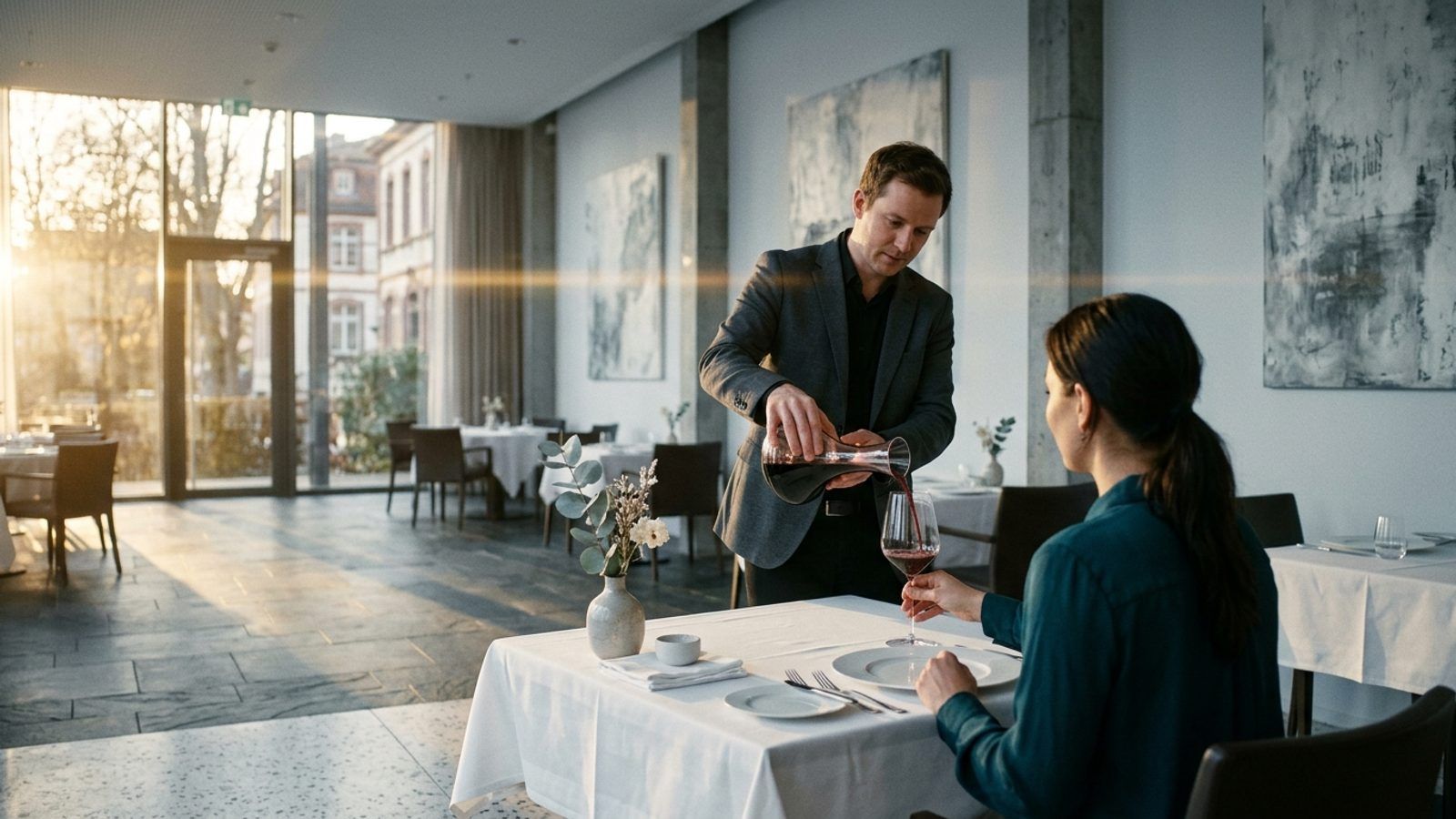
Most French dining rooms are dark on a Sunday morning. The rent is still being paid, so is the insurance, so is the lease on the coffee machine, and nobody is sitting down. For a lot of owners that has always been fine. It is the one morning the team gets back.
This autumn a good number of them are reconsidering, and not because brunch is fashionable. Brunch has become the fastest-moving eating occasion in France, and it happens to land in hours most restaurants already pay for and do not use.
That is not the same as saying you should open. Popularity tells you demand exists. It does not tell you whether a second service earns more than it costs in your room, with your team and your prices. That is a narrower question, and you can answer it with a calculator and about six weekends.
Why is brunch growing so quickly in France?
Consumer interest in brunch in France grew 83.3% over the twelve months to mid-2026, split roughly 46% home cooking and 54% restaurant channel. Very little else in the French market moved that fast.
Two things in that split matter for an owner rather than a marketer.
The first is that more than half of the growth is going to restaurants rather than home kitchens. The demand is actively looking for somewhere to sit rather than for a recipe.
The second is that brunch is not lunch wearing different clothes. A party booking at eleven on a Sunday is largely not a party you would have served at one. They sit longer, they order differently, and they tend to arrive in groups that formed socially rather than out of hunger. You are adding an occasion rather than moving covers around the week. That is the whole argument for it, and it is a good one.
What does a second service actually cost?
Do the arithmetic before the enthusiasm. Your fixed costs are already paid on a Sunday morning, which is the appeal, but everything else is new money.
Take a forty-cover room opening 10:30 to 14:30. Staff it modestly with two front of house, one chef and one kitchen porter, and you are buying roughly sixteen to eighteen paid hours. At a fully loaded cost of about twenty euros an hour, that is somewhere between 320 and 360 euros before you have bought a single egg.
Now work back from the guest. If your average brunch spend is 28 euros and your food cost runs at 30%, each cover contributes a little under twenty euros once the plate is paid for. Against 350 euros of labour, you need roughly eighteen covers to stand still. On a forty-cover room turning once and a bit, eighteen is reachable. It is not automatic. Below about twenty covers you are opening your restaurant, tiring your team and working for nothing.
There is a cost that does not appear in that sum, and it is the one that closes brunch services after two months. Saturday night finishes late. Sunday brunch starts early. Somebody has to do the turnaround, and the day off your team has always had is the day you are proposing to take. If you cannot staff it without leaning on the same people who worked Saturday, the arithmetic above is optimistic no matter how many covers you do.
How do you test brunch without committing to it?
Run six Sundays. Not two, because the first two measure novelty, and not twelve, because you will have committed by then whatever the numbers say.
Keep the menu short. Eight to ten items sharing prep with what your kitchen already does is a test. Thirty items is a second restaurant, and it will fail for reasons that have nothing to do with whether brunch works for you.
Cap the covers below what you think you can do. A room comfortably full at thirty is a better advertisement than a room in chaos at forty-five, and you are trying to learn something rather than to maximise one weekend.
Then measure four things each week: total covers, average spend, the split between booked and walk-in, and how many guests were new to you rather than existing regulars. That last figure is the one owners forget to collect and the one that decides the question. Brunch that brings forty covers of people who already eat with you on Fridays is worth much less than brunch that brings twenty-five covers of people who had never been in.
One discipline: do not discount to fill the room. A brunch tested at a promotional price tells you nothing about a brunch sold at its real one.
Why does a new service live or die on being found?
Here is the part that catches people out. Your existing guests know you for dinner. They are not the ones who need to hear about brunch, and telling them is the easy half.
Brunch is looked for rather than stumbled upon. People search "brunch près de moi", or their town with the word brunch attached, and increasingly they ask an assistant to suggest somewhere and to say what is on. That search happens on Friday or Saturday for a Sunday, and it is decided in a few minutes.
If your brunch exists on a chalkboard, a printed card by the door and a story that expired yesterday, none of it is visible to any of that. The dishes and the prices need to exist as readable text on the web, in the languages your guests read, before the demand can find its way to your door.
How Deskadora helps
Nothing above is a software problem, and the decision is yours. What a system can do is stop the practical side being the reason a good idea never gets tested.
A second menu costs nothing on Deskadora's free plan. Menus, categories, items, photos and languages are all uncapped, so a brunch card sits alongside your dinner menu without touching your bill, and when you change three dishes after the second Sunday you change them in a minute rather than reprinting. If the draft exists on paper, you can photograph it and have it turned into structured items rather than typing it out. Translations are produced across the twelve languages, and any wording you correct by hand stays corrected.
Those menu pages are built to be read by Google and by AI assistants, which is the point of the section above. Menu scan analytics, also on the free plan, tell you whether anybody is looking, which is a useful early signal in a six-week test.
On the paid side, the booking widget on your own site takes party size, and turn times are set as rules by party size rather than one figure for the room, which matters when brunch parties sit longer than dinner ones. Deposits can be attached to larger weekend tables if group no-shows become a problem. The AI voice agent answers the "do you do brunch, and what time" calls that arrive mid-service. The guest CRM lets you tell your existing guests once, then see whether the people who came for brunch ever came back for dinner.
If you would like to see the menu, booking and guest side working together before you decide, a twenty-minute demo covers it.
FAQ
How many covers does a brunch service need to break even?
Work it from your own labour bill rather than from a benchmark. Add up the paid hours the service costs you, including the turnaround and the extra cleaning, and divide by what one cover contributes after food cost. In the forty-cover example above, roughly 350 euros of labour against a contribution of just under twenty euros per cover puts break-even near eighteen. Your figure will differ, mainly on staffing and average spend, but most rooms land between fifteen and twenty-five. If your realistic Sunday sits below that number, the answer is no.
Will brunch take covers away from our Sunday lunch?
Usually not, and the French occasion data suggests brunch is being added rather than substituted, but it depends on what your Sunday already looks like. A room with a strong booked lunch at one o'clock has more to lose than a room that opens at seven in the evening. Check it by comparing total Sunday covers and total Sunday revenue against the same weeks last year, not brunch covers in isolation. If brunch does thirty and lunch drops by twenty-five, you have bought a lot of work for five covers.
Should brunch be a separate menu or part of the main one?
Separate, for three reasons. Guests searching for brunch need to find a page that is about brunch, not a section halfway down a dinner menu. Your kitchen needs a card reflecting what it can actually send between half past ten and half past two. And keeping it separate means you can change it, pause it for a month, or drop it after the test without touching the menu that pays your bills the rest of the week. On a digital menu there is no printing cost to separating them, so the only reason to combine them is habit.