How do you fill midweek tables when diners are cutting back?
French diners are cutting back and quiet weeknights feel it first. How to fill midweek tables with guests you already know, without discounting your menu.

Amelia Cooper
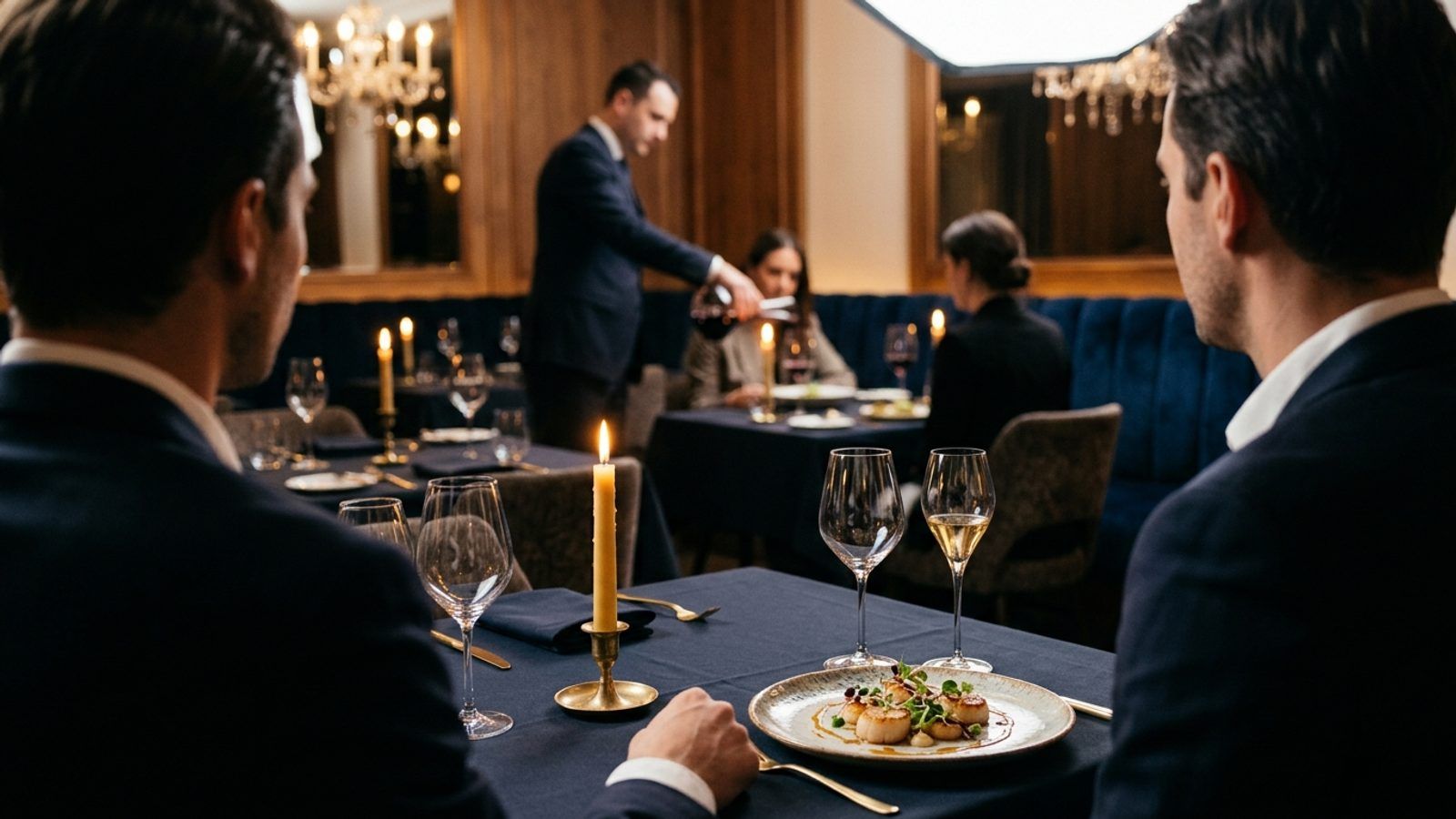
Ask a restaurateur in France how 2026 is going and you will often hear the same answer: the weekends hold, the weekdays hurt. The trade press tells the same story. Food Service Vision's latest barometer, reported in June, shows restaurant turnover flat over the first five months of 2026, with footfall slightly down and table-service restaurants losing around 3% in April and May. In May, a third of French consumers said they had cut their restaurant spending, more than double the share of a year earlier. Analysts now describe a weekend that stretches from Thursday to Monday, which is another way of saying that Tuesday and Wednesday are carrying the downturn.
If your quiet nights have grown quieter this year, it is not your cooking. It is the year. The question is what to do about it, and the least expensive answers are usually sitting in your own booking history.
What is happening to midweek dining in France this year?
The pattern behind the numbers is arbitration, not abandonment. People have not stopped eating out. They go out less often, and they concentrate the visits they keep on the occasions that matter to them, which mostly means the weekend. Fast food is holding up better than table service precisely because it captures the smaller, cheaper visit that a sit-down dinner used to be.
For a full-service restaurant, the marginal visit was the Tuesday dinner or the Wednesday lunch, and the marginal visit is what a squeezed household cuts first. The peak nights largely look after themselves. Friday and Saturday will fill in most decent restaurants regardless. Which means the difference between a good year and a hard one is now decided on the nights nobody fights over: Tuesday to Thursday, and weekday lunch.
Why is chasing new guests the expensive way to fill a Tuesday?
The reflex answer to empty tables is more marketing: portal ads, social campaigns, more visibility on the marketplaces. All of that costs money per stranger reached, and strangers are the hardest audience for a quiet night. A widely cited Harvard Business Review figure puts the cost of acquiring a new customer at five to twenty-five times the cost of keeping an existing one, and restaurants sit at the painful end of that range once per-cover fees and ad spend are counted.
There is also a behavioural problem. When budgets tighten, the diner who still books is choosing safety: a place they already trust, where they know the evening will be worth the money. First-time visits are the adventurous purchase, and adventure is exactly what value-conscious diners postpone. Marketing to strangers on the nights when strangers are least adventurous is swimming against the current.
The guests most likely to fill a Tuesday table already know you.
Which of your guests are most likely to book a quiet night?
Look at your booking history and three groups stand out.
The first is your regulars, the people who already come once or twice a month, usually at the weekend. Some of them would happily shift a visit to a Tuesday if there were a reason to, and a quieter room with the same kitchen is already half the reason.
The second is locals. Weekday dining is a local behaviour. Tourists and special occasions cluster at weekends and holidays; the guest who walks fifteen minutes for dinner on a Wednesday lives or works nearby. If your records tell you who your locals are, you know who to invite.
The third is lapsed guests, the ones who came two or three times and then stopped. Not unhappy, just out of the habit. A short, warm message to a guest who has not visited in sixty days, mentioning something concrete, the new menu, the quiet terrace on Wednesdays, reads as an invitation rather than an advert.
The common requirement is that you need guest records you actually own: visit history, contact details, preferences. That is exactly what marketplace bookings do not leave behind, which is why the restaurants best placed for a soft year are the ones whose bookings run through their own book.
What makes a midweek offer work without discounting the menu?
Blanket discounts are the tempting lever and usually the wrong one. They train guests to wait for the discount, they cheapen the positioning you spent years building, and they give up margin on covers you would have had anyway.
The better approach is to give midweek its own reason to exist. A short chef's menu that changes every week and is only served on Tuesdays. A wine pairing evening with the vigneron's bottles you cannot pour at weekend volume. An earlier seating that suits families and older guests. The dishes your kitchen loves but cannot run on a packed Saturday. Value-conscious guests respond to a defined, fairly priced experience at least as well as to a percentage off, because what they are rationing is disappointment, not only money.
Whatever you try, measure it. An offer sent to a defined list of guests either produced bookings or it did not. If you can see which invitation led to which reservations, you can keep the ideas that fill tables and drop the ones that only fill inboxes.
How Deskadora helps
Deskadora is built around the guest book that makes this possible. Every reservation, whether it arrives through your website widget, the phone, or a walk-in, feeds a guest CRM that belongs to your restaurant: visit history, preferences, labels such as regular or local, and contact details, with the data never pooled or resold.
From that book you can send campaigns to a segment rather than a blast to everyone: regulars, guests who have not visited in sixty days, locals. Each campaign reports what was delivered, opened, and clicked, and, more usefully, which bookings arrived in the days that followed, so a Tuesday offer is judged in covers rather than impressions.
The bookings themselves come in through your own channels. The booking widget sits on your site and your Google profile on a subscription, with bookings landing on your own timeline, so an extra midweek table lands straight there. The AI voice agent answers the phone when the room is short-staffed, so the Tuesday caller books instead of giving up. And the free unlimited QR menu publishes menu pages built to be found on Google and cited by AI search tools, which keeps new locals discovering you while your campaigns bring the known ones back.
If your Tuesdays have gone quiet this year, start with the book you already have. There are probably a few hundred people in it who had a good evening at your tables and simply have not been invited back. One well-aimed invitation is a small experiment with a measurable answer.
Frequently asked questions
Should I discount to fill midweek tables?
Usually not as a first move. Discounts spend margin on guests who might have paid full price and teach the rest to wait. Try a midweek-only experience first, a short chef's menu, a pairing evening, an earlier family seating, and reserve discounts for narrow, measured uses such as winning back long-lapsed guests.
How many guest contacts do I need before campaigns are worth doing?
Fewer than you might think. A few hundred contacts with visit history is enough to test a segmented invitation, because the point is not reach but fit: the right fifty locals are worth more than five thousand strangers. What matters is that results are measurable, so each send teaches you something about your own guests.
Is the midweek slump just seasonal, or should I plan for it to last?
The French data for 2026 points to arbitration under purchasing-power pressure rather than a blip: fewer visits, concentrated on peak occasions. Seasons will still help and hurt, but building a direct relationship with your guests pays in either case. If the squeeze eases, you keep the extra covers. If it does not, you own the channel that fills the quiet nights.
Related articles
How do you plan staff and stock when guests book later?
Guests book later and turn up less predictably. A simple pickup log, one flexible shift and firmer bookings let you set the rota and the prep with less guesswork.
Is your lunch service ready for the meal-voucher vote?
France is voting on supermarket use of meal vouchers. Whatever the result, weekday lunch is won on certainty. Four fixes to make before the winter.
Should your restaurant take reservations over WhatsApp?
WhatsApp adoption varies sharply across Europe, but for many guests it is the only app they already have open. What to check before switching bookings on there.
How many systems does it take to seat one table?
Most restaurants run more software than they realise, and the cost lands on staff attention. How to audit your stack before the autumn season.
How do you take group bookings without losing the evening?
Group bookings are the most resilient demand of 2026, and the most fragile. How to take large parties without long phone calls or an empty room.