How much of your dining room should you keep for walk-ins?
At the rentrée your room changes from visitors to locals. How to work out your real walk-in rate and stop holding tables that stay empty.

Amelia Cooper
Content Manager
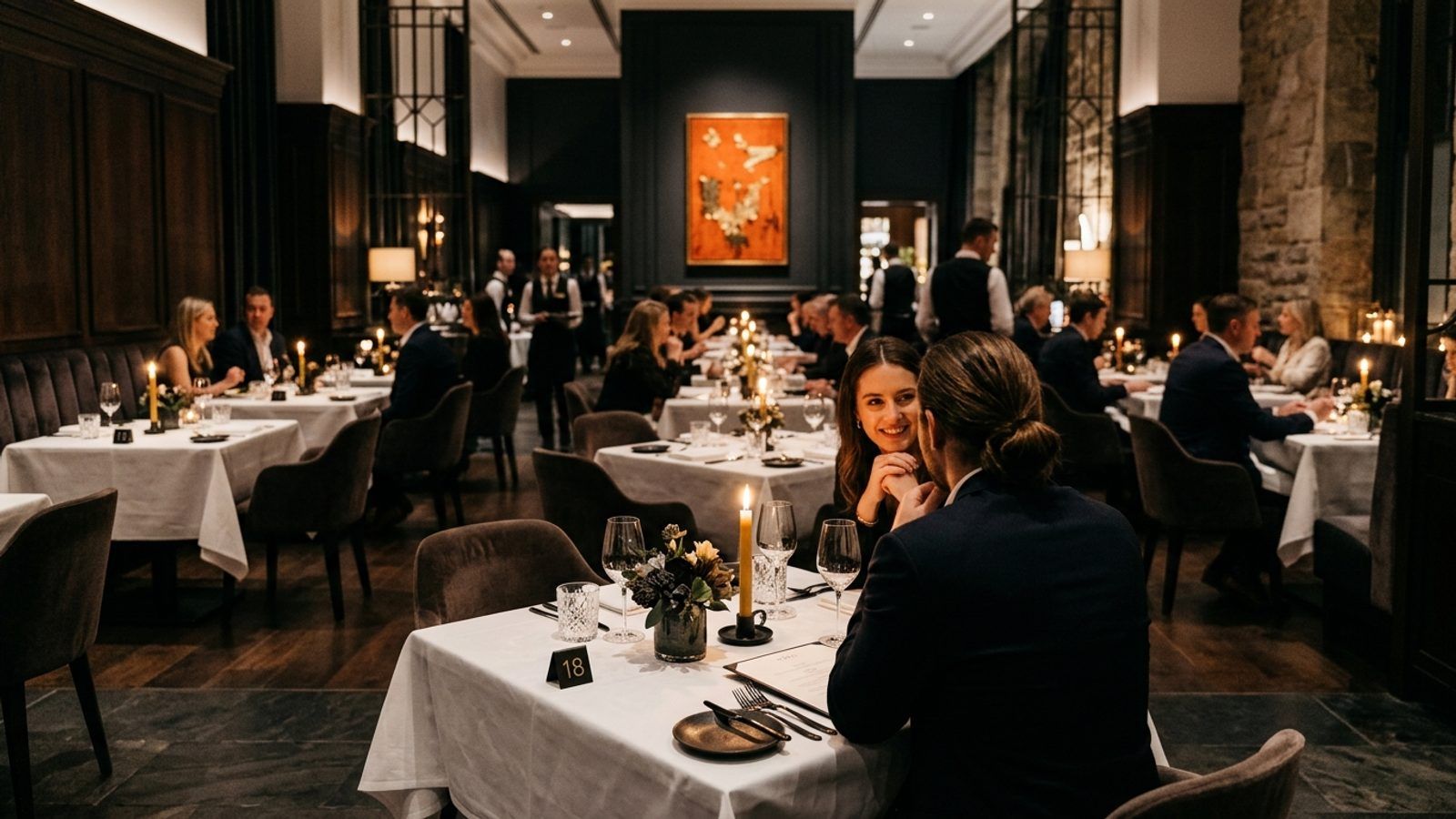
There is a table in most French dining rooms this month that nobody is sitting at. It has a reserved card on it, or it does not, and either way the decision was made on instinct at about six o'clock. Hold two tables back for walk-ins. Hold four. Hold none tonight because the book looks full.
September is when that instinct stops being reliable. The mix of people coming through the door changes at the rentrée, and the habits that worked through August quietly stop working. Most owners notice a month later, when they look at a slow Thursday and cannot say whether they were quiet or simply badly arranged.
What changes in your room at the rentrée?
Through the summer a good share of your covers arrive without warning. Visitors walk a street, read a board, and sit down. You can hold tables back with some confidence because you know somebody will take them.
From the first fortnight of September that demand largely leaves. What replaces it is local, and local diners behave differently. They plan, they book, they come on the nights they have always come, and they arrive in smaller parties on weekdays and larger ones at the weekend. The room fills from the book rather than from the pavement.
The economics make the arrangement matter more than it did. UK and European hospitality revenue fell around 2.1% in real terms in 2025, with food-led restaurants slightly worse at 2.2%, while the average French restaurant ticket has risen roughly 15 to 25% since 2019. Guests are paying more per head and coming slightly less often. In that setting a table held empty for ninety minutes is not a rounding error, and neither is a party of four sent to the place across the road.
What does holding a table actually cost?
Work it out for one night and the number is usually uncomfortable.
Take a fifty-cover room doing two sittings on a Friday. Holding back two four-tops across the evening is up to sixteen covers you have chosen not to sell. If your average spend is thirty-five euros, that is a maximum exposure of about five hundred and sixty euros for the night. You will not lose all of it, because walk-ins do arrive. But if walk-ins fill those tables at eight o'clock rather than seven, you have lost a first sitting on both, and that is the part owners rarely count.
The opposite mistake has a cost too, and it is harder to see because it walks away. A couple at the door on a Wednesday, told the room is full while two tables sit reserved for bookings that will not arrive until nine, do not come back next month. Nobody records that. It does not appear in any report.
The point is not that one error is worse than the other. It is that both are being made blind, once a night, by whoever is holding the book.
How do you work out your real walk-in rate?
You do not need a model. You need four weeks of counting, and the discipline to count by night and by hour rather than as an average.
Record every cover as booked or walk-in, and record the time it sat. At the end of the month you will have something more useful than a gut feeling: a Tuesday number, a Friday number, an early number and a late number. Almost every restaurant that does this finds the pattern is sharper than expected. Walk-in demand tends to concentrate in a narrow window, often the first hour of service and again quite late, and to be close to zero in the middle when the booked tables are turning.
Add the refusals. A tally on the host stand of every party you turned away, with the size and the time, is the other half of the picture and takes ten seconds a time. Refusals at 19:15 mean you are holding too little early. Empty held tables at 21:00 mean you are holding too much late.
Then set the hold by service, not by habit. Two tables early on a Friday and none at all on a Tuesday is a perfectly sensible answer if that is what the counting says.
Why is turn time the more useful variable?
Holding tables is the blunt tool. Knowing how long a table is genuinely occupied is the precise one, and it is the number most restaurants get wrong in the same direction.
A couple does not need the same ninety minutes as a party of five, and a party of seven needs considerably more than either. Applying one turn time to every party size means you are either rushing your two-tops or losing a sitting on your large tables, and usually both on the same night. Sensible defaults look something like an hour for one or two guests, ninety minutes for three or four, two hours for five or six, and three hours for seven and above, adjusted to how your kitchen actually sends.
Get those figures right and the walk-in question softens considerably. If you know a four-top booked at 19:00 will be free at 20:30, you can seat a walk-in at 19:05 and still honour the 20:30 booking. You are not holding a table. You are using it twice. That is where the extra covers come from on a night that feels full but is not.
The last piece is a waitlist rather than a refusal. A party told "twenty-five minutes, can I take your mobile" is a party you might still seat. A party told "we are full" is a party you have given away.
How Deskadora helps
Most of the above is judgement, and no software will make it for you. What a system can do is give you the numbers to judge with, and then hold the arrangement steady when the room is busy and the person on the door is new.
Deskadora keeps turn times as rules by party size rather than one figure for the room, set per venue on your own terms, so availability shown to guests reflects how your tables really behave. The floor plan carries live table states, occupied, reserved, being cleaned or free, so the person seating knows at a glance what is genuinely available rather than what the paper book implied twenty minutes ago. Walk-ins and the on-the-day waitlist sit in the same place as bookings, which is what makes the counting above possible without anybody keeping a separate tally.
Bookings arrive from the widget on your own site, from the phone through the AI voice agent, and by hand from staff, and all of them land in the same book against the same floor plan. Table assignment can be suggested automatically, with a preference for clustering parties or spreading them across the room depending on how you like to work.
None of that decides how many tables to hold back on a Thursday in October. It does mean that at the end of the month you can answer the question with evidence rather than instinct. If you would like to see the reservations, floor management and waitlist side working together, a twenty-minute demo covers it.
FAQ
What is a normal walk-in percentage for a restaurant?
There is no useful benchmark, and chasing one will mislead you. A terrace on a busy street in Nice might see half its covers walk in during summer and a fifth in November. A destination room at the end of a lane might see almost none in either season. Your own figure, measured over four weeks and split by night and by hour, is worth more than any industry average, because the only decision it has to inform is how you arrange your own room.
Should we hold specific tables or just leave capacity free?
Hold capacity, not tables. Reserving a named table for a walk-in that may never arrive locks up the exact seat that would have suited a booking, whereas keeping a target number of covers unsold in a given hour leaves you free to seat whoever turns up wherever they fit. In practice that means booking to roughly eighty to ninety per cent of the room in your peak hour and letting the floor decide the rest, which also gives you somewhere to put the party of six that grew to eight.
How do we handle walk-ins without annoying guests who booked?
Say the real number and keep it. If a table is free until 20:30, offer it on that basis, tell the guests plainly when you will need it back, and put a note against the booking so the next person on the floor knows. Problems come from vague promises rather than short ones. Most walk-in guests accept a defined ninety minutes without complaint, and a waitlist with a text message when the table is ready is far better received than a closed door, particularly from locals you want back in December.
Start Today with Deskadora
Give your guests a smoother visit from the moment they book. Register now to see how Deskadora simplifies reservations, manages no-shows, and helps your team stay organised. Bring clear table management, smart scheduling, and guest insights into one place. Offer a better experience without adding extra pressure on staff.