Can a guest with an allergy order from your menu without asking?
The EU has made allergies its 2026 food safety focus. What a French restaurant must provide in writing, and how to do it without slowing service down.

Amelia Cooper
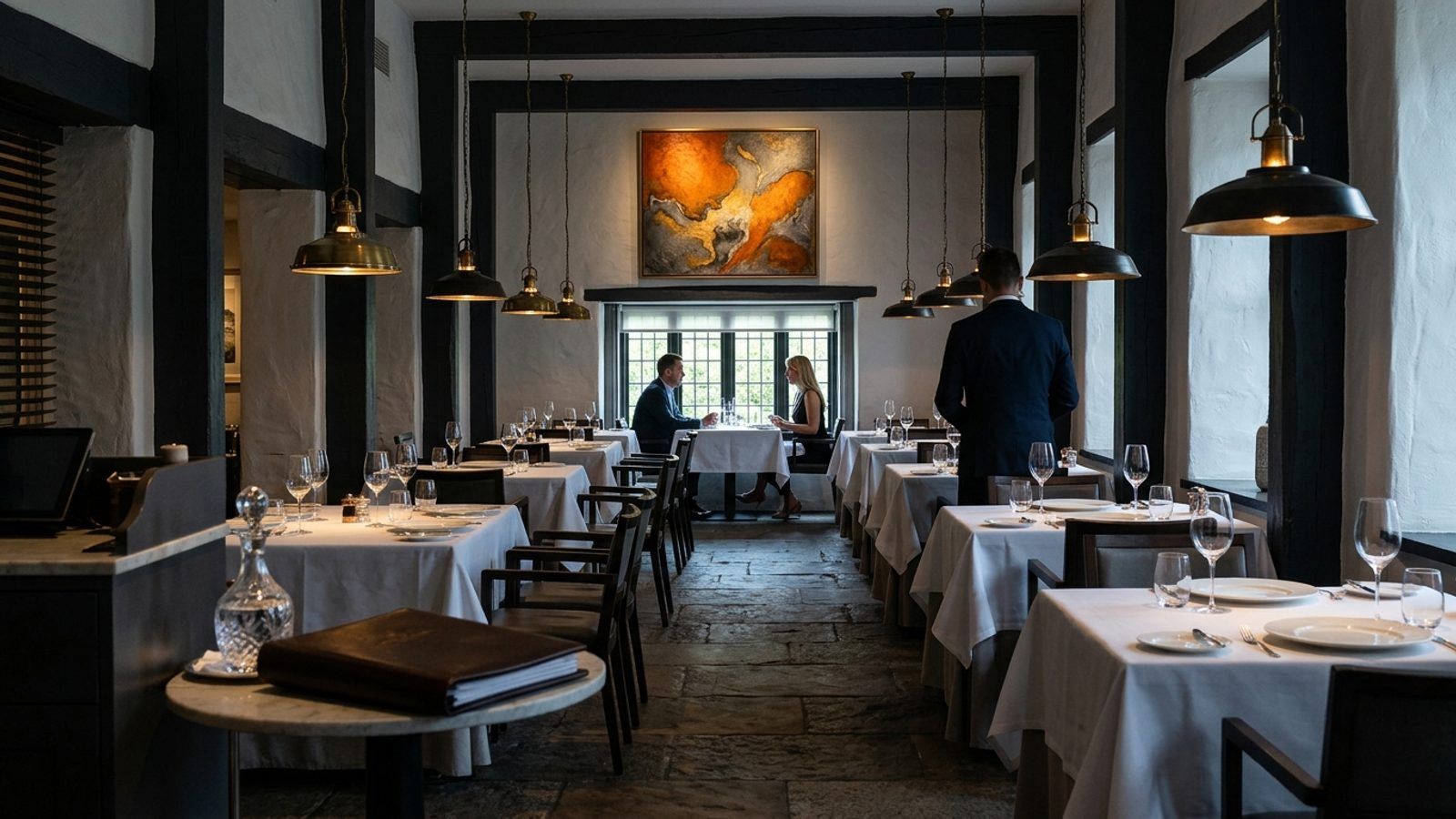
A table of four sits down on a Thursday. One of them cannot eat nuts. What happens next, in most dining rooms in France, is a small relay race. The guest asks the server. The server is not certain about the pesto, so walks to the pass. The kitchen is mid-service. An answer comes back, filtered through two people and a noisy room, and the guest decides whether to trust it.
That relay usually works. It also takes three or four minutes out of a service, it depends entirely on who is on shift, and it puts a twenty-two year old in the position of giving an answer from memory that somebody's evening, and occasionally rather more than their evening, depends on.
This is worth looking at again this autumn, because the European Commission has made allergies the subject of its 2026 food safety campaign, with a factsheet published in February setting out what the rules actually require. None of the law is new. The attention is.
Why are allergens getting attention again this year?
Start with how many people this concerns, because the honest answer is more than most owners assume and fewer than the headline numbers suggest.
Across Europe, roughly one adult in five reports having had a food allergy at some point, and about one in eight says they have one now. Measured strictly, by clinical food challenge, the figure falls to around three or four per cent. Both are useful and they answer different questions. The clinical figure is who is genuinely at risk in your dining room. The self-reported figure is who will be reading your menu carefully and asking your staff questions.
Add the intolerances, the religious restrictions and the elective diets, and a meaningful share of any full room arrives with a question about the food. That is not a passing fashion. It is the normal condition of a dining room now.
Fourteen allergens have to be declared under EU law: cereals containing gluten, crustaceans, eggs, fish, peanuts, soybeans, milk, nuts, celery, mustard, sesame seeds, sulphur dioxide and sulphites, lupin and molluscs.
What does the law actually ask of a restaurant?
Regulation 1169/2011 is the source. For food that is not prepacked, which covers almost everything a restaurant serves, the fourteen allergens must be declared. The Commission's position is that the information may be given verbally, provided there is a clear indication of how a guest can obtain it and it is available in writing on request. Member states set the penalties and run the checks.
France sits at the stricter end of that. The expectation here is that written allergen information exists on the premises and can be consulted by the guest. A sign directing people to ask a server, with nothing written behind it, does not meet that on its own. Enforcement falls to the DGCCRF.
Note what this does not say. It does not require allergens to be printed beside every dish on the card. A folder at the host stand or a board on the wall is acceptable. What it does require is that the written information exists, that it is current, and that a guest who wants it can reach it.
Current is where most venues quietly fall down. The allergen folder was accurate the day it was printed. Then the fishmonger changed, a supplier reformulated a stock base, and two dishes went on for the season. The folder did not change with them.
This is general information rather than legal advice. If you need certainty about your own venue, ask a professional.
Where does this break down during service?
Three places, and none of them is the kitchen not knowing its ingredients.
The first is the relay itself. The answer a guest receives depends on who is working that night. A chef de partie who built the dish knows what is in it. A server three weeks into the job, relaying across a busy pass, is repeating something. Neither version is written down, and neither can be checked afterwards.
The second is language, and on the coast this is the one that gets underestimated. A guest asks in German, a server answers in French, and the word that decides the matter is the name of a nut. Most of the conversation translates fine. Allergen vocabulary is exactly the part that does not, because it is specific, and because a near-miss here is not a near-miss, it is simply wrong. A guest reading a French card through their phone can easily conclude that fruits à coque means fruit.
The third is version drift. A printed allergen list is a photograph. A menu is not. Every supplier change, every plat du jour, every small adjustment to a recipe either reaches the written information the same day or quietly makes it false.
What does getting this wrong actually cost?
Set the serious case aside for a moment, not because it does not matter but because it is not the common one. The common one is quieter, and it happens most services.
A guest who cannot work out what is in a dish orders the thing they are sure about. Usually that is the plainest, cheapest plate on the card. They do not complain and they do not leave a review. Your average spend on that cover simply drops by ten or fifteen euros. Across a year, and across the share of your room with some restriction, that is a real number.
Then there is the booking that never arrives. Where one person in a group has a restriction, that person very often chooses the venue for everyone, because they are the one doing the checking. If your menu online does not answer their question, they move on to a restaurant whose menu does. You never see the enquiry, so it never registers as a loss.
How do you fix it without adding work to service?
Four things, none of them expensive.
Put the information at the dish rather than in a folder. The folder satisfies the letter of the rule. Allergens shown against each dish, where the guest is deciding, is what removes the conversation. It also spares the guest having to announce a medical condition to a stranger in front of the rest of the table, which plenty of people would rather not do.
Separate what you know from what you suspect. Contains and may contain are different statements and guests read them differently. A venue that marks everything "may contain nuts" in order to be safe has told its guests nothing at all, and the guests with a real allergy will stop trusting any of the labels. The Commission is explicit that precautionary wording should rest on an assessment of risk rather than stand in for one.
Give one named person the job of updating it when a dish changes, on the same day, tied to the same moment you change the price. Not the team. One person.
Publish it in the languages your guests read. If half your summer covers are not French speakers, allergen information that exists only in French is information half your room cannot use.
How Deskadora helps
None of the above is a software problem, and the responsibility stays with your kitchen. What a system can do is stop the written part depending on memory.
The Deskadora digital menu is free and uncapped, including the languages. Allergens sit on the dish itself rather than in a separate document. When you add or change an item, the platform reads the name, description and ingredients and tags the allergens it recognises from the fourteen, so a plat du jour added at four in the afternoon does not go out untagged.
Those automatic tags are marked as what they are. A dish your kitchen has confirmed shows as containing an allergen. One that came only from the automatic pass shows as may contain, and the guest menu says plainly that tagged allergens are suggestions and that staff should be asked. Anything your kitchen has confirmed is never overwritten by a later pass.
The allergen names themselves are held as translated labels rather than being re-translated dish by dish, so moutarde reaches a German guest as Senf and a Polish guest as gorczyca, the same way on every dish, every time. Your own dish descriptions translate alongside them, and any wording your team corrects by hand is kept.
Because the menu is a web page rather than a PDF, a change is live the moment you save it, in every language at once. Those pages carry structured data, so when somebody asks a search engine or an assistant whether you cater for a particular diet, there is something there to answer with. And the booking form asks about dietary requirements before the guest arrives, so what they tell you reaches the kitchen with the reservation rather than at the pass.
If your allergen information currently lives in a folder behind the bar, moving it onto the menu itself is an afternoon's work, and the menu costs nothing.
FAQ
Do allergens have to be printed on the menu card in France?
No. What is required is that written allergen information is available on the premises and can be consulted, which a folder, a wall board or a digital menu all satisfy. A sign telling guests to ask a server, with nothing written behind it, does not. Putting the allergens on the dish itself is a choice rather than an obligation, and it is the choice that saves the most time during service.
Can we rely on automatic allergen tagging?
Not on its own, and no supplier should tell you otherwise. Automatic tagging is good at the obvious cases and it catches the dish nobody got round to labelling. It does not know your supplier changed the stock base last month. Treat it as a first pass that your kitchen confirms, keep confirmed and suggested visibly different, and a guest gets a useful answer instead of a blanket disclaimer.
What should we do about cross-contamination?
Say something specific rather than something general. If your kitchen genuinely cannot rule out contact because there is one fryer or one prep bench, state that on the dishes concerned. A "may contain everything" line at the foot of the card protects nobody, reads as a shrug, and trains the guests who most need the labels to ignore them.
Related articles
Should your restaurant take reservations over WhatsApp?
WhatsApp adoption varies sharply across Europe, but for many guests it is the only app they already have open. What to check before switching bookings on there.
How many systems does it take to seat one table?
Most restaurants run more software than they realise, and the cost lands on staff attention. How to audit your stack before the autumn season.
How do you take group bookings without losing the evening?
Group bookings are the most resilient demand of 2026, and the most fragile. How to take large parties without long phone calls or an empty room.
How do you turn summer guests into autumn regulars?
Full terraces now, quiet tables in September. How to turn this summer's one-time guests into autumn regulars before the season slips away.
How do you win the last-minute diner this summer?
Summer 2026 diners are booking later than ever. How to capture last-minute restaurant bookings, from same-day tables to spontaneous groups.