Which of your guests are you allowed to email?
French rules on emailing diners tightened in 2026. What soft opt-in covers, when you need consent, and how to build a guest list you can actually use.

Amelia Cooper
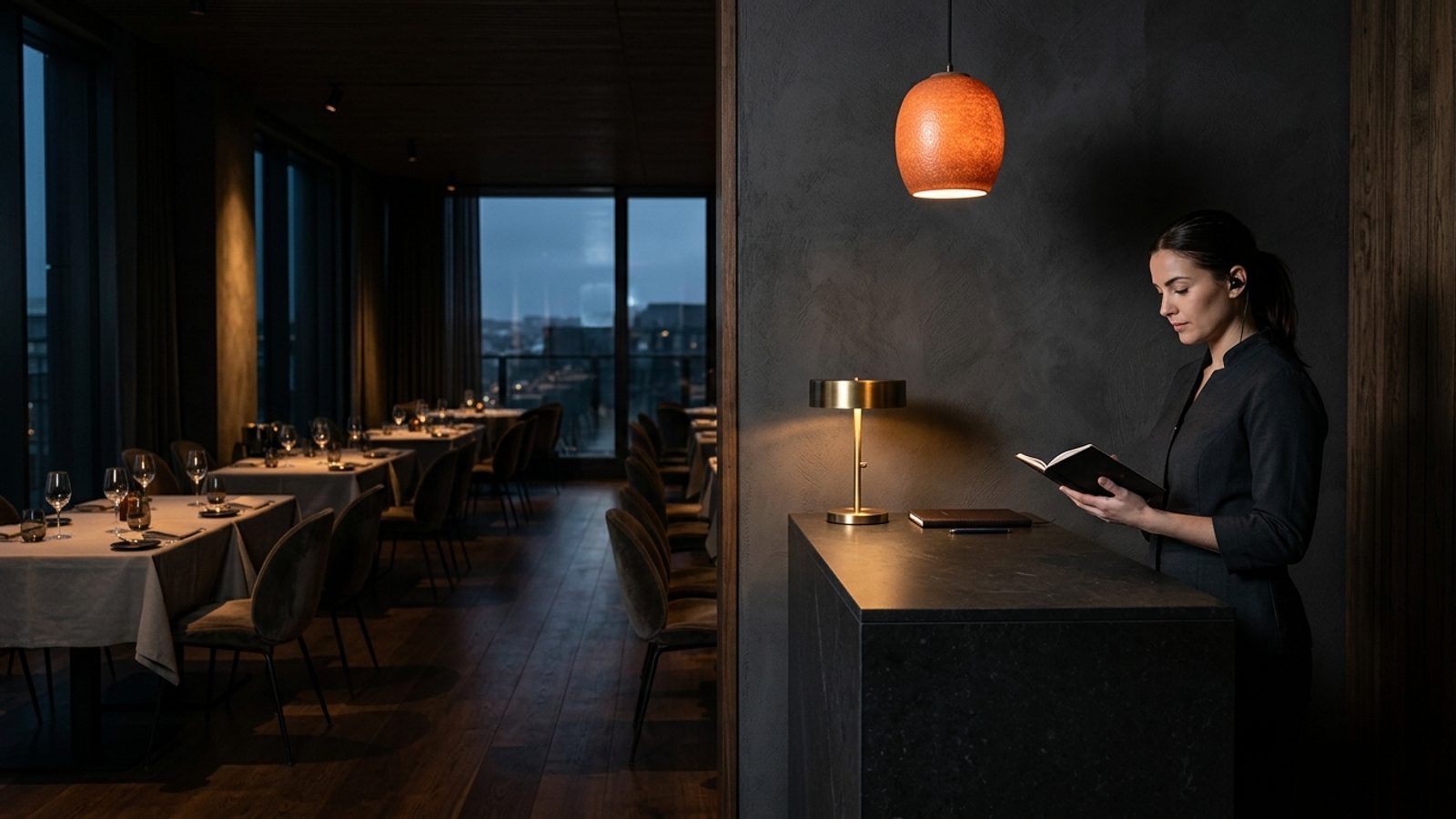
Most restaurants in France are sitting on a guest list they barely use. A few thousand names and email addresses gathered over years of bookings, spread across a spreadsheet, a booking platform and the back of the reservation book. Then autumn arrives, the year-end season needs filling, and somebody suggests emailing everybody.
That is the moment worth pausing on. Not because the idea is wrong, a message to people who have already eaten with you is one of the cheapest ways to fill a quiet Tuesday, but because "everybody" is almost never the right list, and 2026 has been a year of tightening on exactly this point.
Why has this become a live question in 2026?
Two things changed.
The first is enforcement. Commercial prospecting has been one of the leading grounds for complaints to the CNIL year after year, and 2026 has brought harder checks on prospecting by telephone and email, including on-site investigations. Hospitality is not a quiet corner of this. Accor was fined 600,000 euros in 2022 over its prospecting practices, and hotels and restaurants are among the heaviest users of guest lists.
The second is narrower and has caught a lot of businesses out. On 14 April 2026 the CNIL published its first formal recommendation on tracking pixels in emails, the invisible image that tells you a message was opened. Its position is that where open tracking exists to measure and improve campaign performance, it needs its own consent, separate from permission to send. Sending and measuring are now two different rights. Organisations had until 14 July 2026 to inform their existing contacts, and that date has passed.
Neither of these puts email out of reach. They turn an unexamined list from an asset into a liability, which is a different problem and a fixable one.
Which guests can you write to without asking first?
There is a real exemption for existing customers, usually called soft opt-in, and for a restaurant it covers more than owners tend to assume. Three conditions have to hold together.
The address must have been collected directly from the guest in the course of a booking or a sale. Not bought, not lifted from a review site, not copied out of a supplier's list. What you send must concern something similar to what they came to you for, so telling your diners about the autumn carte or a New Year's Eve sitting sits comfortably inside that, while promoting a partner's cookery holiday does not. And opting out must be free and easy, offered at the moment the address is collected and again in every message you send.
Where all three hold, you can write to a past guest without a tick box. Where any one of them fails, you need consent, and consent means a clear, separate, affirmative act. Not a pre-ticked box. Not a line inside booking terms nobody reads. Not silence.
In practice, the guest who booked a table and left their email to get the confirmation is usually reachable about your food. The guest whose address came from a competition entry, a Wi-Fi login or a list somebody handed you is not, unless they agreed to hear from you.
What does consent look like when a booking is all you have?
Most restaurants only ever meet a guest once, at the point of booking, so that is where this is decided.
Keep the marketing question separate from the booking itself. A guest confirming a table should not have to accept your newsletter to get the table, and bundling the two is the single most common way a consent record becomes worthless. One unticked box, plainly worded, next to the booking form.
Then record the evidence, because consent you cannot prove is consent you do not have. You want the date, the wording the guest actually saw, and where the box was. If a complaint arrives two years later, that record is the whole of your answer.
Two habits are worth building at the same time. Prune on a three-year clock: the CNIL applies three years from the last contact to prospecting data fairly strictly, and an email open does not count as contact from the guest. A reply, a booking or an enquiry does. And keep the basis alongside the behaviour in your guest records. Knowing that someone is a regular is useful. Knowing whether you are allowed to write to them is what decides whether they belong in the send.
Do you need permission to see who opened it?
This is the part of the April recommendation worth reading twice, because it changes a habit rather than a rule.
Open tracking used to gauge how a campaign performed needs consent. Tracking limited strictly to deliverability, adjusting how often you send or stopping sending to addresses that never respond, sits in a narrower space that the CNIL suggests may not.
For a restaurant sending a handful of campaigns a year, the honest reading is that open rate is a nice-to-have you may not be able to keep, and the numbers that actually matter to you are not affected. Unsubscribes, bounces and, above all, bookings that followed a send are all countable without watching anybody open anything. If you have to choose, keep the one that tells you whether the email brought covers.
What about SMS and the telephone?
Text is stricter, not looser, and the timing rules surprise people. Marketing messages to consumers in France need prior consent, and they cannot be sent before 10:00 or after 20:00, nor on Sundays or public holidays. That rules out most of the hours a restaurant would instinctively pick, including the Sunday evening before a quiet week.
Transactional messages are a separate matter and are not prospecting. A booking confirmation, a reminder the day before, a note that a deposit was taken: these exist to deliver the service the guest asked for. Keep them clearly apart from anything promotional, and do not let an unsubscribe from the newsletter switch off the reminder that stops a no-show.
How Deskadora helps
None of the above is solved by software, and the wording of your consent question is a decision for you, not for a supplier. What a system can do is make the record trustworthy and the send correct.
Guest profiles are built from the bookings you already take, through the widget on your own site, the AI voice agent or the book itself, so every address in your list arrives with the booking that produced it. Marketing consent is held as its own record against the guest rather than assumed from the fact that a booking exists, which is the distinction this whole article turns on.
Unsubscribes are kept per venue and honoured on every later send, so a guest who opts out stays out without anybody remembering to remove them. Complaints reported back by the mail provider unsubscribe the guest automatically, and addresses that hard bounce are marked and dropped, which keeps the list clean for the three-year pruning question as well as for deliverability.
Campaigns then go to segments rather than to everybody. Guest tags are maintained for you as bookings accumulate, new, regular, frequent, lapsed, at risk, birthday this month, so a year-end message reaches the two hundred people it suits instead of the four thousand it does not, in any of the twelve languages your guests read. Conversions are attributed by matching bookings made in the week after a send, which is the measurement that survives all of the above intact.
Open and click tracking exists in the platform, and whether you use it is your call to make against the April recommendation rather than ours to make for you.
If you would like to see the guest records, consent and campaign side working together before the year-end season, a twenty-minute demo covers it.
This article is general information about how these rules work in practice, not legal advice. If your list has grown in ways you cannot account for, it is worth an hour with a lawyer before the next send rather than after it.
FAQ
Can we email guests who booked through a third-party platform?
Usually not on the strength of the booking alone. The question is who collected the address and under what terms, and on most marketplace platforms that is the platform rather than you, which is also why the addresses are often masked or withheld in the first place. Read what your contract actually permits before treating those guests as yours to write to. The durable fix is to collect your own contact details at the point of booking on your own site, or at the table, with your own consent question attached, so that the list you build is one whose origin you can explain.
How long can we keep a guest on our list?
For prospecting purposes the CNIL works to three years from the last contact, and applies it seriously. What counts as contact is the part worth knowing: a reply, a booking, an enquiry or a click all restart the clock, while an email open does not. After three years of silence you can send one message asking whether the person still wants to hear from you, and if there is no clear positive answer the data should be deleted or archived. In practice this means a list that is reviewed once a year is a list you can defend, and one that has only ever grown is not.
Does unsubscribing from our newsletter stop booking confirmations?
It should not, and if it does you have a problem worth fixing. Marketing messages and transactional ones rest on different bases: the first needs permission, the second exists to deliver the service the guest asked for when they booked a table. Keep the two separated so that a guest who has no interest in your autumn menu still gets the confirmation, the reminder and the deposit notice. Collapsing them into one on or off switch causes no-shows and annoys the guests who were trying to be helpful by telling you what they did not want.
Related articles
Should your restaurant take reservations over WhatsApp?
WhatsApp adoption varies sharply across Europe, but for many guests it is the only app they already have open. What to check before switching bookings on there.
How many systems does it take to seat one table?
Most restaurants run more software than they realise, and the cost lands on staff attention. How to audit your stack before the autumn season.
How do you take group bookings without losing the evening?
Group bookings are the most resilient demand of 2026, and the most fragile. How to take large parties without long phone calls or an empty room.
How do you turn summer guests into autumn regulars?
Full terraces now, quiet tables in September. How to turn this summer's one-time guests into autumn regulars before the season slips away.
How do you win the last-minute diner this summer?
Summer 2026 diners are booking later than ever. How to capture last-minute restaurant bookings, from same-day tables to spontaneous groups.